
The county’s history reaches from the riverbank to the courthouse square. People crossed the Wabash here for thousands of years, and an Indian mound park near Fairbanks preserves a burial and ceremonial ground that predates the first European maps of the valley. Two hundred years of building came after: a limestone courthouse on the square, two small-town Carnegie libraries, a college hall at Merom, churches and cemeteries on the National Register. Some you can walk into. Some you can only see from the street. Plan an afternoon and you can trace the whole arc, from the people who were here first to the brick the county put up to last.
SULLIVAN COUNTY HISTORY
Two Centuries of History.

SPOTLIGHT
Waapaahsiki Siipiiwi Mound Historical Park
Near Fairbanks, where the Wabash narrows at a crossing the Miami called Waapaahsiki Siipiiwi, a Late Woodland Indian mound site lies preserved near the river. Archaeological work dates the ground to between roughly A.D. 500 and 1650, before European contact, when mound builders along the river used places like this one for burial and ceremony. By the late 1700s, Miami, Wea, Piankashaw, Kickapoo, Delaware, and Shawnee people hunted and traded through the valley, and the narrows half a mile away saw crossings documented into the War of 1812. The park is owned and cared for by the Sullivan County American Indian Council and is open dawn to dusk. Walk it quietly; it is a sacred site, not a playground.
MUSEUMS
Dugger Coal Museum
On Main Street in Dugger, the Coal Museum has kept the town’s mining history under one roof since 1980. Inside are photographs, mining tools, and the things the miners themselves left behind: the financial ledger of UMWA Local 7220 from 1954 to 1967, and three mine inspectors’ notebooks logged shaft by shaft. It’s a small collection, and a personal one, gathered by the families of the men in the pictures. The doors open for the Dugger Coal Festival at the end of September and into early October, and by appointment the rest of the year. Call ahead at (812) 648-2332 and someone will meet you there.
Attractions & Things To Do
Sullivan County doesn’t have to work hard to impress history buffs. Near Fairbanks, in the county’s northwest corner, the Indian mound park and the Fairbanks Community Center, the 1910 schoolhouse volunteers rescued, make a morning on their own. Merom, the village near the bluff, answers with the old college hall, a 1918 Carnegie library in the smallest town in the United States to have one, and the Merom Livery Stable. In Sullivan, the courthouse anchors the square with the Sherman Building, one of the finest theaters in Indiana when it opened in 1915, at the corner of Court Street; the Carnegie library is two blocks west, Center Ridge Cemetery is out on West Johnson Street, and the old Sullivan County Poor Home is out on County Road 75 North.
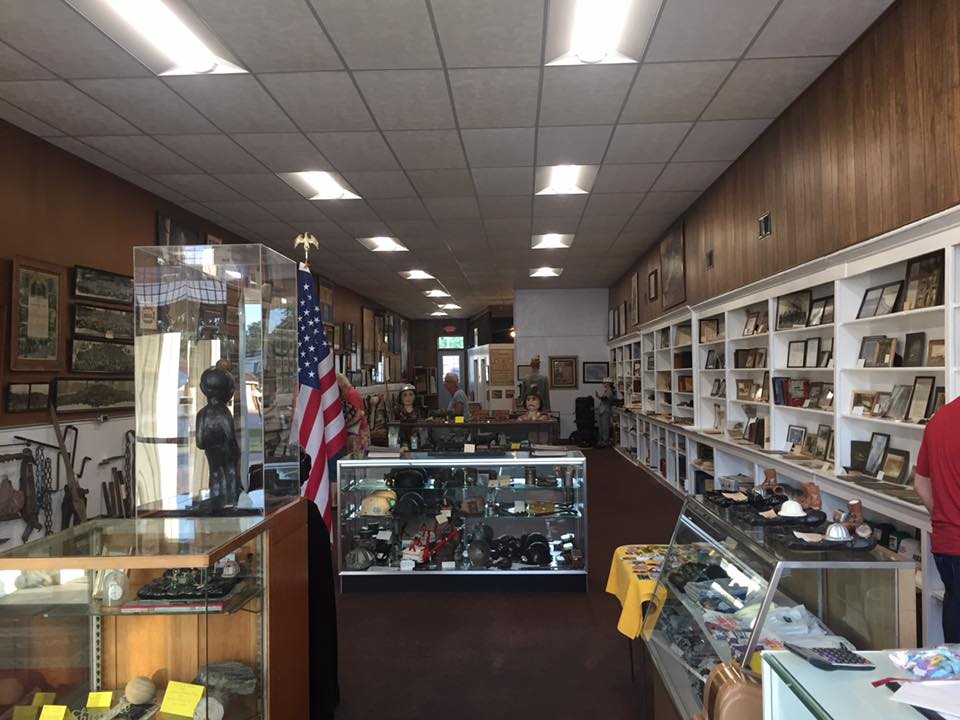
The Sullivan County History Museum on the square gives you the full picture before you start exploring; doors are open Wednesday through Friday, 10 to 4, with monthly Saturday hours posted on its Facebook page. Eight state historical markers round out the list, from the Fairbanks Massacre to the Merom Bluff Chautauqua, each one a story worth your time. The Sherman Building, the Poor Home, and the Livery Stable are working buildings or private today, so give those three a look from the street. Use the filters below to sort by town.


